


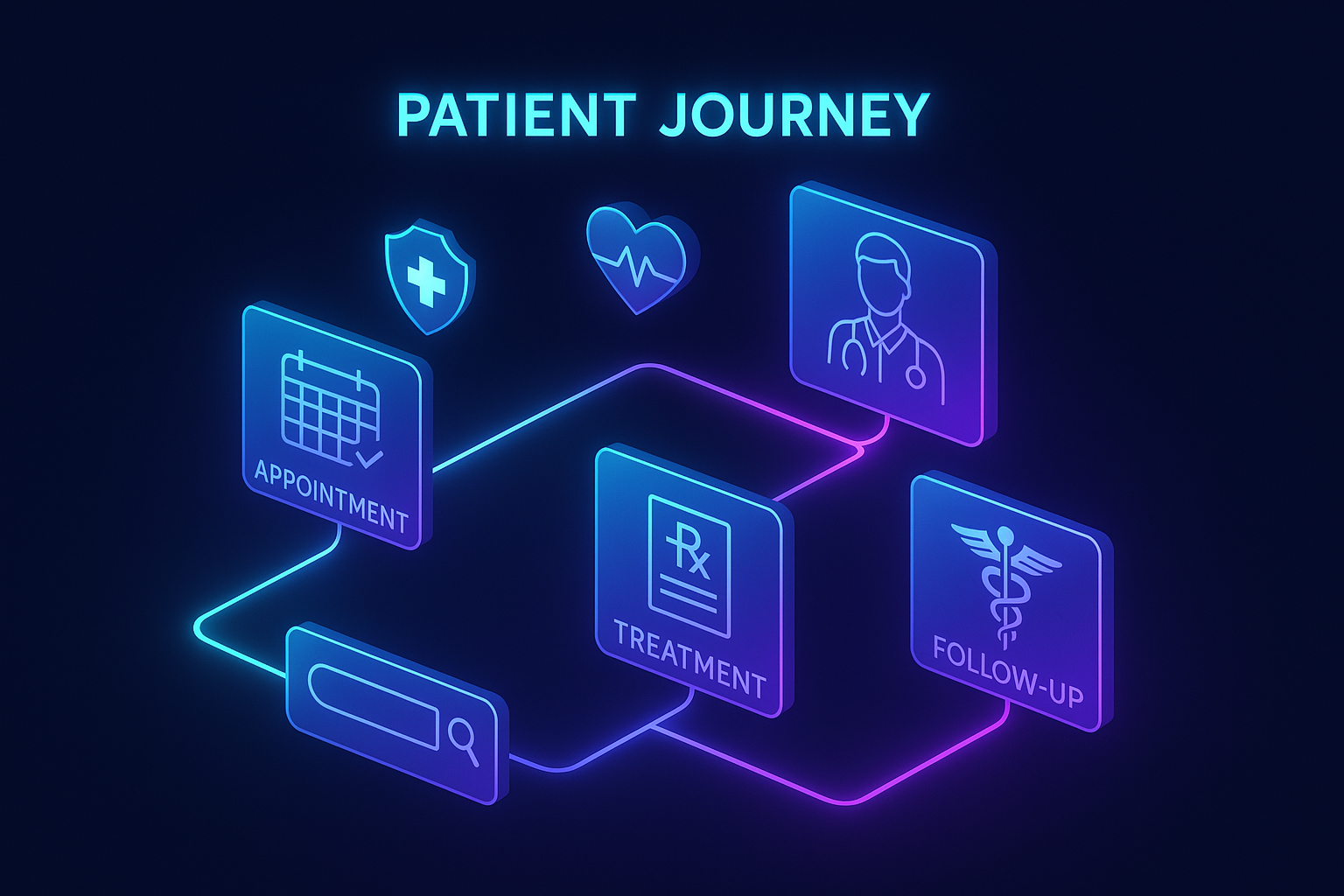
Medical practice websites require specialized design considerations that balance patient needs, clinical credibility, and digital performance. We develop custom healthcare websites that serve as comprehensive patient resources while functioning as powerful patient acquisition engines. Our medical web development process begins with understanding your practice's unique specialties, patient demographics, and growth objectives to create digital experiences that resonate with your target patient population.
Our healthcare website development incorporates extensive medical content management systems that allow your staff to update provider schedules, announce new services, share health resources, and communicate practice updates without technical knowledge. We implement sophisticated appointment request systems that capture patient information, insurance details, and reason for visit, automatically routing inquiries to appropriate staff members. The patient portal integration enables secure access to appointment history, prescription refills, test results, and direct messaging with healthcare providers.
Every medical website we develop includes comprehensive provider biography pages detailing education, board certifications, hospital affiliations, professional memberships, areas of clinical interest, and approach to patient care. Service pages extensively describe medical procedures, treatment options, conditions treated, diagnostic capabilities, and therapeutic approaches using patient-friendly language that educates while encouraging consultation. We create dedicated pages for each medical specialty, subspecialty, and treatment option, ensuring patients searching for specific medical solutions find detailed, authoritative information about your capabilities.
The technical architecture prioritizes healthcare-specific functionality including multi-location management for practice groups, physician directory search capabilities, insurance verification tools, and telemedicine integration options. We implement sophisticated analytics tracking that monitors patient journey paths, appointment conversion rates, phone call sources, and form submission patterns to continuously optimize patient acquisition performance. Mobile optimization ensures flawless functionality across all devices, recognizing that emergency medical searches often occur on smartphones.
Our medical website designs incorporate trust-building elements including patient testimonial showcases, credential displays, award recognitions, hospital affiliation badges, and insurance acceptance lists. We develop extensive patient education libraries covering common conditions, treatment explanations, preparation instructions, and recovery guidelines that position your practice as a trusted healthcare resource. The content strategy includes symptom checkers, risk assessment tools, and health calculators that engage visitors while qualifying potential patients.
This FAQ helps clients understand exactly how your custom-coded website service works, what is included, how the process is structured, what they can expect during development, and which parts require a one-time payment vs. ongoing maintenance. Clients can browse through the questions to get quick, clear answers before contacting you for a consultation.
Medical practice websites require specialized features including provider credentialing displays, procedure-specific content pages, patient portal integrations, insurance verification tools, appointment scheduling systems, prescription refill requests, medical record access, health resource libraries, condition-specific landing pages, physician referral systems, emergency contact protocols, multi-location management, department directories, clinical trial information, patient education materials, testimonial management systems, and regulatory compliance considerations. These healthcare-specific elements must integrate seamlessly while maintaining patient privacy and clinical accuracy.
Medical content development follows a structured process involving initial consultation with clinical staff to understand procedures and specialties, research of current medical literature and treatment guidelines, drafting of patient-friendly content that maintains clinical accuracy, review cycles with healthcare providers for medical accuracy verification, optimization for search engines and patient comprehension levels, and regular updates to reflect new treatments, technologies, or clinical protocols. We translate complex medical terminology into accessible language while preserving scientific accuracy, ensuring content educates patients without oversimplifying critical health information.
Modern medical websites integrate numerous patient engagement tools including online appointment scheduling with real-time availability, patient intake forms with conditional logic, symptom assessment questionnaires, medication refill request systems, secure messaging platforms for provider communication, bill pay integration, insurance eligibility checkers, virtual consultation booking, health risk assessments, appointment reminder systems, patient satisfaction surveys, newsletter subscription management, health tracking tools, educational video libraries, downloadable patient resources, live chat support, automated frequently asked questions, and personalized patient dashboards. Each tool streamlines patient interactions while collecting valuable data for practice improvement.
Multi-location medical practices require sophisticated website architecture featuring centralized content management with location-specific variations, individual location pages with unique addresses, phone numbers, hours, and provider listings, unified appointment scheduling that routes to appropriate locations, provider profiles that indicate which locations they serve, location-specific service offerings and specialties, integrated mapping and directions for each facility, location-based search engine optimization, consolidated patient portal access across all locations, and centralized resource libraries accessible from any location page. This architecture maintains brand consistency while allowing location-specific customization.
Medical website security requires multiple protective layers including SSL certificates for encrypted data transmission, secure hosting environments with regular security updates, password-protected areas for sensitive information, regular security audits and vulnerability assessments, backup systems for data recovery, firewall protection against malicious attacks, secure forms for patient information collection, access controls for staff portal areas, audit trails for information access, protection against common web vulnerabilities, regular software updates and patches, secure third-party integrations, and incident response protocols. These measures protect patient information while maintaining website availability and performance.
Medical practice pages require substantial content depth with main service pages containing 1,500-2,500 words of comprehensive information, condition-specific pages featuring 1,000-2,000 words covering symptoms, causes, treatments, and outcomes, provider biographies extending 500-750 words detailing experience and approach, procedure descriptions requiring 800-1,500 words explaining process, benefits, and recovery, blog posts ranging 1,200-2,000 words for educational topics, and FAQ sections providing 150-300 word answers to common questions. This content depth satisfies both search engine requirements for authority and patient needs for comprehensive information before making healthcare decisions.
